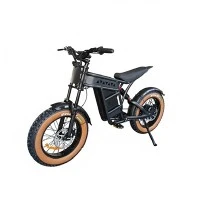
Can a Mini Fat Tire Bike be used on snow?
As a supplier of Mini Fat Tire Bikes, I often get asked whether these compact yet robust bikes can handle snowy conditions. The short answer is yes, a Mini Fat Tire Bike can indeed be used on snow, and in this blog post, I'll explain the science behind it, the benefits, and some important considerations.
The Science Behind Mini Fat Tire Bikes on Snow
To understand why Mini Fat Tire Bikes are suitable for snow, we need to look at their unique design features. The most prominent feature is, of course, the fat tires. These tires typically have a width of 3.8 inches or more, which is significantly wider than standard bike tires. The increased width distributes the bike's weight over a larger surface area. According to the principles of physics, pressure is defined as force divided by area (P = F/A). When the area (A) increases while the force (F), which is the weight of the bike and the rider, remains relatively constant, the pressure (P) exerted on the snow decreases.
This reduced pressure allows the tires to float on top of the snow rather than sinking deeply into it. It's similar to how snowshoes work; by spreading the weight over a larger area, they prevent the wearer from sinking into the snow. In the case of Mini Fat Tire Bikes, the fat tires act as natural snowshoes for the bike, enabling it to traverse snow-covered terrain with relative ease.
Another important aspect is the tread pattern of the fat tires. Most Mini Fat Tire Bikes come with deep, aggressive treads. These treads are designed to grip the snow and provide traction. The deep grooves in the treads dig into the snow, creating a more secure contact between the tire and the surface. This traction is crucial for maintaining control while riding on snow, especially when turning, braking, or accelerating.
Benefits of Using a Mini Fat Tire Bike on Snow
Versatility
One of the biggest advantages of a Mini Fat Tire Bike is its versatility. Unlike traditional bikes that are limited to paved roads or dry trails, a Mini Fat Tire Bike can be used in a variety of conditions, including snow. This means that you can continue to enjoy cycling even during the winter months when other bikes might be rendered useless. Whether you're commuting to work through a snow-covered city street or going on a winter adventure in the mountains, a Mini Fat Tire Bike can get you there.
Fitness and Fun
Cycling on snow is a great workout. The resistance provided by the snow requires more effort from the rider, which means you'll burn more calories and build more muscle compared to cycling on a flat, dry surface. It's also a lot of fun! Riding a Mini Fat Tire Bike on snow gives you a unique sense of adventure and freedom. You can explore areas that are inaccessible to cars or other vehicles, discovering hidden winter landscapes and enjoying the peace and quiet of the snow-covered outdoors.
Portability
As the name suggests, Mini Fat Tire Bikes are compact and lightweight compared to full-sized fat tire bikes. This makes them easy to transport and store. You can easily fit a Mini Fat Tire Bike in the trunk of your car, allowing you to take it with you on winter trips or to different snow-covered locations. Additionally, their smaller size makes them more maneuverable in tight spaces, which can be an advantage when navigating through snowy trails or crowded areas.
Considerations When Using a Mini Fat Tire Bike on Snow
Tire Pressure
Adjusting the tire pressure is crucial when riding a Mini Fat Tire Bike on snow. Lowering the tire pressure further increases the surface area of the tire in contact with the snow, improving traction and floatation. However, you need to be careful not to lower the pressure too much, as this can cause the tire to pinch flat or damage the rim. A good starting point is to reduce the tire pressure to around 5 - 10 psi, but you may need to adjust it based on the type of snow (powdery, packed, etc.) and your riding style.
Riding Technique
Riding a Mini Fat Tire Bike on snow requires a different technique compared to riding on dry ground. You need to be more cautious and anticipate the reduced traction. When turning, take wider turns and slow down gradually to avoid skidding. Braking should also be done gently, as sudden braking can cause the tires to lock up and result in a loss of control. It may take some practice to get used to these techniques, but with time, you'll become more confident and proficient at riding on snow.
Maintenance
Snow and moisture can take a toll on your bike. After riding in the snow, it's important to clean your Mini Fat Tire Bike thoroughly to remove any snow, ice, or salt. Salt, in particular, can cause corrosion on the bike's components. Lubricate the chain and other moving parts regularly to prevent rust and ensure smooth operation. Additionally, check the tire pressure and the overall condition of the bike before each ride to ensure that it's in good working order.
Related Products
If you're interested in exploring more options for riding on snow, we also offer a range of other fat tire bikes. Our All Wheel Drive Electric Fat Bike provides even more power and traction, making it ideal for tackling deeper snow and more challenging terrain. The electric motor assists you in pedaling, reducing the effort required and allowing you to cover longer distances.


Our Electric Fat Bike Snow is specifically designed for winter riding. It comes with features such as a powerful battery, a durable frame, and high-quality fat tires to ensure a smooth and enjoyable ride on snow.
For those who prefer a more convenient and comfortable riding position, our All Terrain Step Thru Electric Bike is a great option. It has a step-through frame design, making it easy to get on and off the bike, and it can handle various terrains, including snow.
Conclusion
In conclusion, a Mini Fat Tire Bike is a great option for riding on snow. Its fat tires provide the necessary floatation and traction to navigate snow-covered terrain, and its compact size makes it portable and easy to handle. However, it's important to take the necessary precautions, such as adjusting the tire pressure, using the right riding technique, and maintaining the bike properly.
If you're interested in purchasing a Mini Fat Tire Bike or any of our other fat tire bikes for snow riding, we're here to help. We offer a wide range of models to suit different needs and preferences. Contact us to start a procurement discussion and find the perfect bike for your winter adventures.
References
- "Bicycle Science" by David Gordon Wilson
- "Winter Cycling: A Practical Guide" by John Summerson
- Various research papers on tire traction and snow mobility in the field of mechanical engineering.