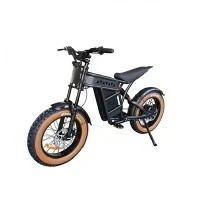
Hey there, fellow cycling enthusiasts! As a supplier of mountain electric bikes, I often get asked about the weight of a typical mountain electric bike. It's a question that matters a lot, whether you're a casual rider, a hardcore mountain biker, or someone just looking to make a smart purchase. So, let's dive right in and explore this topic.


First off, what makes a mountain electric bike different from a regular bike? Well, it's got an electric motor and a battery, which are the main culprits when it comes to adding extra weight. A typical non - electric mountain bike usually weighs between 25 to 35 pounds. But once you add the electric components, things change.
On average, a mountain electric bike can weigh anywhere from 40 to 70 pounds. That's a pretty wide range, right? Let me break down the factors that contribute to this variation.
Battery
The battery is one of the heaviest parts of an electric bike. Batteries come in different sizes and capacities. A small - capacity battery might weigh around 5 to 7 pounds, while a larger, high - capacity battery can tip the scales at 10 to 15 pounds or more. For example, if you're looking at a All Terrain Electric Mountain Bike, it might have a larger battery to provide more power for off - road adventures. This means it'll be on the heavier side compared to a bike with a smaller battery.
Motor
The motor also plays a big role. There are different types of motors used in mountain electric bikes, such as hub motors and mid - drive motors. Hub motors are usually located in the wheel hub and can add a few pounds to the bike's weight. Mid - drive motors, which are placed near the bike's crankset, are generally more efficient but can also be heavier. A powerful motor, like the one in a Powerful Electric Mountain Bike, might weigh 5 to 10 pounds, depending on its power output.
Frame Material
The material of the bike frame is another factor. Aluminum frames are lightweight and commonly used in many mountain electric bikes. They can keep the overall weight of the bike relatively low. A bike with an aluminum frame might weigh around 40 to 50 pounds. On the other hand, steel frames are heavier but are known for their durability. A steel - framed mountain electric bike could weigh 50 to 70 pounds. Carbon fiber frames are the lightest but also the most expensive. A carbon fiber mountain electric bike might be on the lower end of the weight spectrum, around 40 pounds.
Additional Features
Some mountain electric bikes come with extra features like suspension systems, disc brakes, and racks. These features add to the bike's functionality but also increase its weight. A full - suspension system, which provides a smoother ride on rough terrain, can add 5 to 10 pounds to the bike. Disc brakes are heavier than traditional rim brakes but offer better stopping power. And if you have a rack for carrying gear, that's a few more pounds right there.
Now, you might be wondering, why does the weight of a mountain electric bike matter? Well, there are a few reasons.
Maneuverability
A lighter bike is generally easier to maneuver, especially on technical trails. You can turn, climb, and descend more quickly and with less effort. If you're into downhill riding or tight singletrack, a lighter bike will give you an edge. However, a heavier bike can also have its advantages. It can provide more stability at high speeds, especially on rough terrain.
Portability
If you need to transport your bike in a car or on a bike rack, a lighter bike is much easier to handle. You won't have to struggle as much to lift it into the vehicle or onto the rack. On the other hand, if you're not planning to move your bike around a lot, the weight might not be as big of a concern.
Energy Consumption
The weight of the bike can also affect its energy consumption. A heavier bike requires more power from the battery to move, which means you'll get fewer miles per charge. So, if you're looking for a bike with a long range, you might want to consider a lighter option.
When it comes to choosing a mountain electric bike, it's all about finding the right balance. If you're a beginner or just looking for a bike for casual rides on easy trails, a heavier bike might be okay. It can provide stability and durability. But if you're an experienced rider looking for high - performance on challenging terrain, a lighter bike might be more suitable.
For those of you interested in our 500w Electric Mountain Bike, it strikes a good balance between power and weight. It's got enough power to tackle tough climbs and rough trails, but it's not overly heavy, making it a great choice for a wide range of riders.
If you're thinking about purchasing a mountain electric bike, I'd love to chat with you. We can discuss your specific needs, preferences, and budget. Whether you're looking for a lightweight bike for racing or a more robust bike for all - terrain adventures, we've got options for you. Feel free to reach out to start the procurement negotiation process.
References
- "Bicycle Engineering" by David Gordon Wilson
- "Electric Bikes: A Guide to Buying, Building, and Riding" by Charlie Malin