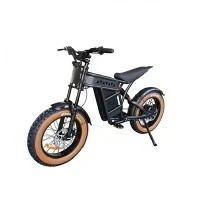
Can I take my urban electric motorcycle on public transportation?
Hey there, fellow riders and urban commuters! I'm an urban electric motorcycle supplier, and I get this question a lot: "Can I take my urban electric motorcycle on public transportation?" It's a valid query, especially for those who want to combine different modes of transport to make their commutes more flexible and hassle - free. Let's dig deep into this topic.
Why People Want to Combine Electric Motorcycles with Public Transport
First off, let's talk about why folks are even thinking about taking their electric motorcycles on public transport. In big cities, traffic can be a real pain. Sometimes, it's just faster to take a bus or a train for a part of your journey and then hop on your electric motorcycle for the last mile. Maybe you need to cross a large river, and the bridge is always congested, or perhaps there's a section of your commute that goes through a business district with restricted vehicle access.
Also, for long - distance trips, you might not want to risk running out of battery on your electric motorcycle. By using public transportation for some parts of the journey, you can preserve your bike's battery life and ensure you reach your destination without any power issues.
Rules and Regulations Vary Widely
The answer to whether you can take your urban electric motorcycle on public transportation is not a straightforward yes or no. Different cities and different types of public transportation have different rules.


For subways or metros in some areas, the space is so limited that they simply don't allow any kind of vehicle, even small electric motorcycles. They're worried about safety, space, and the potential for delays. You can imagine if someone tries to squeeze a motorcycle onto a crowded subway car, it could cause accidents or block the aisles.
On the other hand, some bus systems are more lenient. Some buses have special compartments or areas where you can store small electric bikes or motorcycles. But usually, they have size and weight restrictions. For example, your motorcycle might need to be under a certain length, width, and weight to be eligible to board.
Trains are another story. Some commuter trains have dedicated areas for bicycles, and depending on the size of your electric motorcycle, you might be able to get it on board. But you'll typically need to reserve space in advance, especially during peak hours.
Size and Type Matter
The size and type of your urban electric motorcycle play a huge role in whether it can be taken on public transportation. If you have a super compact, folding electric motorcycle, you're in luck. Folding models can be easily stowed in small spaces, like under a bus seat or in a corner of a train car.
For example, our Electric Motorcycle Bike for Adults is relatively compact and, with a bit of planning, might have a better chance of being allowed on public transport compared to larger models.
However, if you own a big, bulky Adult Racing Sport Motorcycle, it's likely going to be a no - go for most public transportation systems. These larger models take up a lot of space and are often difficult to maneuver in the confined areas of buses, trains, or subways.
Safety First
Public transportation authorities are always concerned about safety. So, if you're planning to take your electric motorcycle on public transport, make sure it's in good working condition. The brakes should be functioning properly, and the battery should be secure. You don't want any loose parts or liquids that could pose a danger to other passengers.
Also, be aware of how to handle your motorcycle on and off the public transport vehicle. If it's a heavy model, you might need help to lift it onto a bus rack or into a train car. And once on board, secure your motorcycle tightly so it doesn't move around during the journey.
Some Tips for Taking Your Electric Motorcycle on Public Transport
- Research Ahead: Before you head out, check the rules of the local public transportation systems. You can usually find this information on their official websites. Some systems even have hotlines you can call to ask specific questions.
- Prepare Your Motorcycle: Clean your motorcycle before boarding public transport. You don't want dirt or grease getting on other passengers or the vehicle. Also, if possible, cover any sharp edges to prevent injuries.
- Be Considerate: Remember, you're sharing the space with other people. Be polite and patient when boarding and exiting. If there are other passengers waiting, let them go first.
Our Electric Motorcycle Range
As an urban electric motorcycle supplier, we offer a diverse range of models to suit different needs. Whether you're looking for a compact and practical bike for daily commuting or a powerful Two - Wheeled Off - Road Motorcycle for some weekend adventures, we've got you covered.
Our 16 Inch Powerful Electric Motorcycle is great for city rides. It's small enough to be maneuverable in traffic and might have a better chance of being accommodated on public transport in some cases.
And for the more adventurous riders, our 3000W Racing Off Road Electric Motorcycle offers high - performance capabilities. While it might be a bit more challenging to take on public transport, it's perfect for those long - range trips where you can use public transport for the non - riding parts.
Contact Us for More
If you're interested in learning more about our urban electric motorcycles or have questions regarding taking them on public transportation, don't hesitate to reach out. Our team of experts is here to help you choose the right model for your needs and answer any questions you may have.
References
- Various local public transportation systems' official handbooks and online resources.
- Industry studies on urban commuting and the use of electric vehicles.