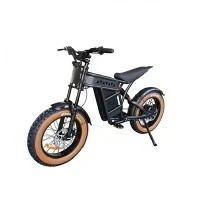
Hey there! As a cargo electric bike supplier, I often get asked about the recommended tire pressure for these beasts. It's a crucial aspect that can significantly impact the performance, safety, and lifespan of your cargo e - bike. Let's dive right in and explore what the ideal tire pressure should be.


First off, understanding the importance of proper tire pressure is key. Just like in cars, the right tire pressure on a cargo electric bike helps ensure optimal handling, stability, and efficiency. When your tires are properly inflated, you'll experience a smoother ride, better traction on the road, and less rolling resistance. This means you can get more mileage out of your battery and make your trips more energy - efficient. On the flip side, incorrect tire pressure can lead to a host of problems. Under - inflated tires can cause the bike to feel sluggish, increase the risk of flats, and put extra strain on the battery. Over - inflated tires, on the other hand, can make the ride feel bumpy and reduce traction.
So, what is the recommended tire pressure for a cargo electric bike? Well, it's not a one - size - fits - all answer. Several factors come into play, such as the type of tires, the weight of the cargo, and the riding conditions.
Tire Type
Different types of tires have different recommended pressure ranges. Most cargo electric bikes come with either pneumatic (air - filled) or solid tires. Pneumatic tires are the most common. They offer a more comfortable ride and better shock absorption. The recommended tire pressure for pneumatic tires on a cargo e - bike usually falls between 35 to 65 PSI (pounds per square inch). However, this can vary depending on the tire manufacturer.
Some high - performance pneumatic tires might have a higher recommended pressure, up to 80 PSI. You can usually find the recommended pressure range printed on the sidewall of the tire. It'll look something like "35 - 65 PSI". Make sure to follow these guidelines as closely as possible.
Solid tires, on the other hand, don't require air pressure since they're made of solid rubber. They're often used for their puncture - resistance, but they can provide a stiffer ride compared to pneumatic tires. Since there's no air to inflate, you don't have to worry about checking or adjusting the pressure regularly. But keep in mind that they may not offer the same level of shock absorption or traction as pneumatic tires.
Cargo Weight
The weight of the cargo you're carrying on your electric bike is another important factor. The more weight you add, the higher the tire pressure you'll need. This is because the increased weight puts more pressure on the tires, and higher pressure helps distribute that weight evenly across the tire surface.
For light cargo loads (less than 50 pounds), you can usually stick to the lower end of the recommended pressure range. But if you're carrying heavy loads, say 100 pounds or more, you'll want to increase the tire pressure to the upper end of the range or even slightly above it, as long as it's within the tire's maximum pressure limit.
For example, if your tire's recommended pressure range is 35 - 65 PSI and you're carrying a light load, 35 - 40 PSI might be sufficient. But if you're hauling a heavy load of tools or groceries, you could increase the pressure to 55 - 65 PSI.
Riding Conditions
The type of terrain and riding conditions also influence the ideal tire pressure. If you're mostly riding on smooth, paved roads, you can use a higher tire pressure. This reduces rolling resistance and makes the bike more efficient. However, if you're going to be riding on rough or unpaved roads, a lower tire pressure can provide better traction and a more comfortable ride.
On gravel or dirt roads, for instance, reducing the tire pressure by about 5 - 10 PSI can help the tires conform to the uneven surface and grip better. But be careful not to go too low, as it can increase the risk of pinch flats.
Now, let's talk about how to check and maintain the tire pressure. You'll need a good quality tire pressure gauge. These are relatively inexpensive and can be found at any bike shop. To check the pressure, simply remove the valve cap from the tire and press the gauge onto the valve stem. You'll hear a brief hiss as the gauge makes a seal, and the reading will show on the gauge.
If the pressure is too low, you can use a bike pump to add air. Make sure to check the pressure frequently, at least once a week, especially if you use your cargo electric bike regularly. And don't forget to check the pressure before long trips.
At our company, we offer a wide range of cargo electric bikes to suit different needs. Whether you're looking for Dual - Battery Electric Cargo Bike, Electric Tricycle for Adults, Electric Bike with Cargo Space, Family - friendly Cargo Ebike, or Electric Cargo Bikes for Families, we've got you covered.
If you're in the market for a cargo electric bike or have any questions about tire pressure or other aspects of our products, don't hesitate to reach out and start a conversation with us. We're here to help you make the best choice and ensure you get the most out of your cargo electric bike. Let's talk and see how we can meet your transportation and cargo - hauling needs.
References
- "Bicycle Mechanics Handbook" by David Remington
- Various tire manufacturer specifications